


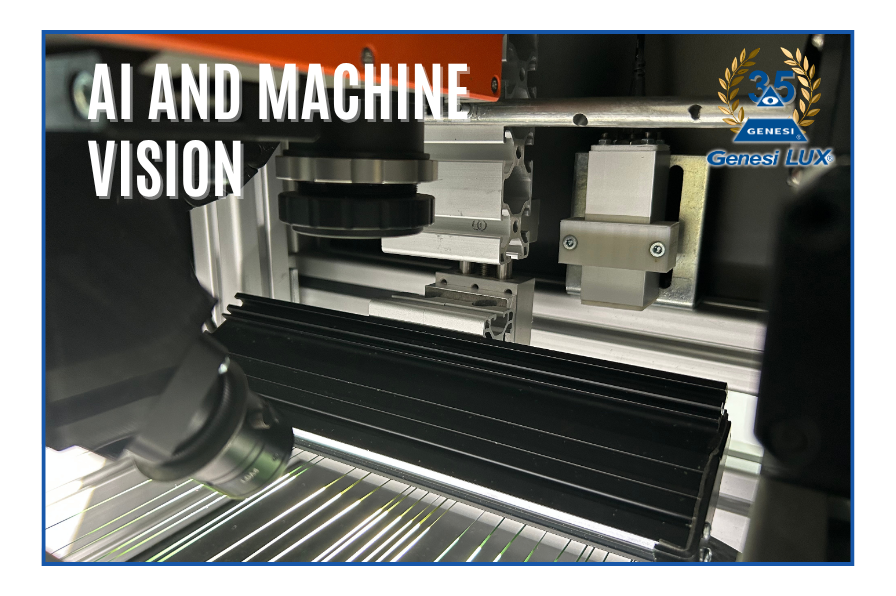
AI and Machine Vision: the evolution of a more essential technology
Advances in image analysis systems and algorithm writing have led, in recent decades, to the evolution of industrial processes and the emergence of the machine vision sector as we know it today.
But... what exactly is machine vision, and what role does LED lighting play?
Machine vision is a branch of industrial automation specialising in the acquisition, interpretation and use of images for automated inspections in machinery. Data acquisition for use in production processes is acquired through the combined use of cameras, lighting systems, optics and processing software, which are essential for ensuring greater precision and speed when used in industrial sectors ranging from quality control to robotic guidance.
Among the elements mentioned above, LED lighting deserves further consideration.
Considered the basis for vision systems since early times, its role has become increasingly important in recent years thanks to technological developments that have made it possible to highlight details that are too specific and imperceptible to the human eye simply by managing the light spectrum.
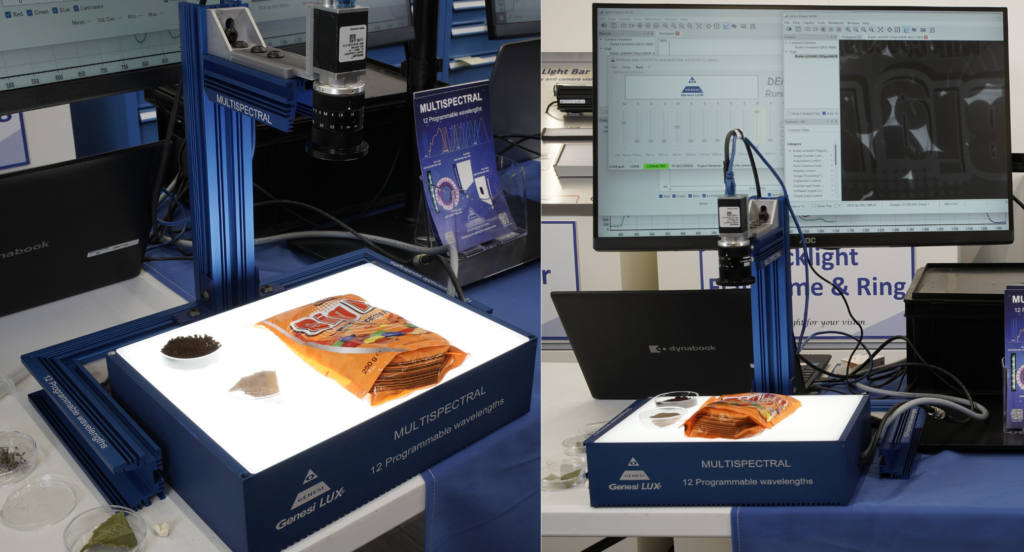
The introduction of LED lighting in the machine vision sector has been one of the most significant enabling factors in the evolution of artificial intelligence-based machine vision systems. The possibility of adopting different lighting techniques, such as direct and diffused lighting, together with the use of selected wavelengths across an extended spectrum ranging from UV, passing through the visible spectrum, to SWIR, has made it possible to acquire images with high information quality and repeatability in a relatively short time, which is equal to a few microseconds.
What about artificial intelligence in machine vision?
Artificial intelligence is one of the elements that has played a fundamental role in the evolution of the machine vision sector and in the improvement of specific industrial processes.
Born in the second half of the twentieth century as a scientific discipline with the aim of designing systems capable of performing tasks that until then required human intelligence, it was only in the late 1990s and early 2000s that the first cases of artificial automation with advanced machine learning and deep learning mechanisms were recorded.
When combined, they enable artificial vision systems to learn from data and adapt to process variability and complex pattern recognition, thus achieving greater accuracy in quality control, sorting, and other systems.
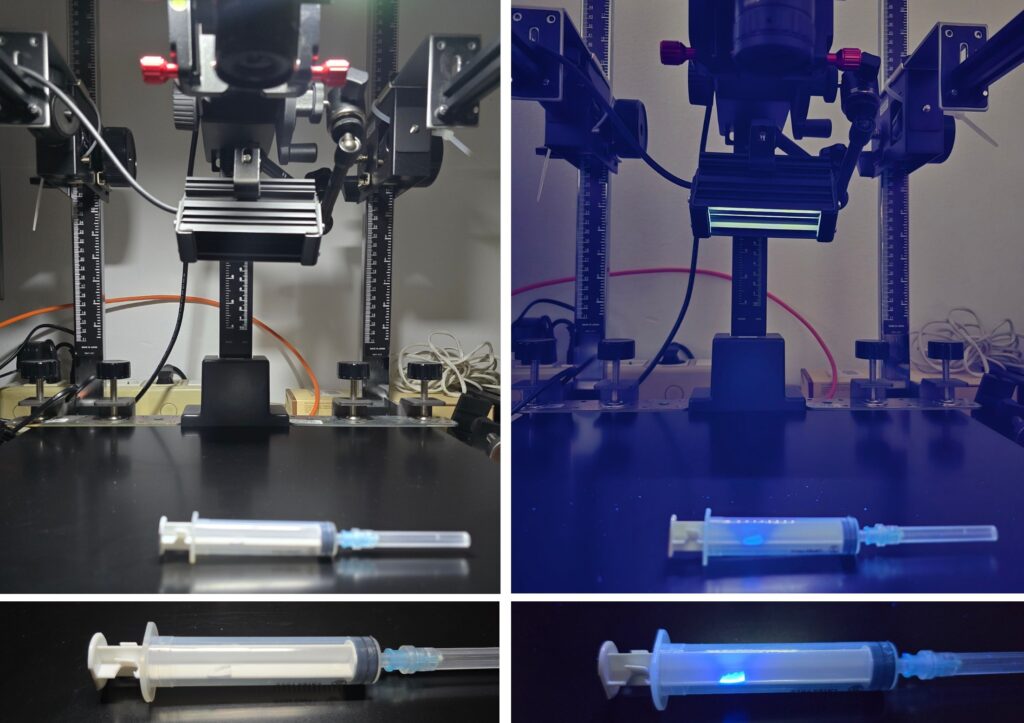
This technological advancement has had a direct impact on the effectiveness of AI and deep learning algorithms applied to machine vision, which are highly dependent on the quality, contrast and consistency of input data. High-performance LED illuminators, with their light stability, spectral accuracy and ability to operate with switching times in the order of microseconds, enable accurate synchronisation with high-speed sensors and acquisition systems.
As a result, lighting is no longer a simple supporting element, but has become a strategic component of the vision system, essential for ensuring the reliability of artificial intelligence models, improving classification, detection and automatic inspection performance, thus making machine vision a key technology in modern industrial processes.
In this evolving context, artificial intelligence, when applied to machine vision, emerges as the result of a technological convergence between advanced algorithms, computing power and the quality of the data acquired.
The precise control of the spectral characteristics of light makes LED lighting a decisive factor in the creation of reliable and repeatable images, an essential prerequisite for the effectiveness of AI models. Its integration into vision systems not only maximises the performance of inspection and automatic analysis applications, but also makes artificial intelligence a truly indispensable technology for modern industrial automation.
As a result, lighting is no longer a simple supporting element, but has become a strategic component of the vision system, essential for ensuring the reliability of artificial intelligence models, improving classification, detection and automatic inspection performance, thus making machine vision a key technology in modern industrial processes.
In this evolving context, artificial intelligence, when applied to machine vision, emerges as the result of a technological convergence between advanced algorithms, computing power and the quality of the data acquired.
The precise control of the spectral characteristics of light makes LED lighting a decisive factor in the creation of reliable and repeatable images, an essential prerequisite for the effectiveness of AI models. Its integration into vision systems not only maximises the performance of inspection and automatic analysis applications, but also makes artificial intelligence a truly indispensable technology for modern industrial automation.